Airstrip Info
| Frequency | 122.90 |
|---|---|
| Elevation | 4232 ft |
| Lat/Long |
41.7074, -112.9192 41° 42.444' , -112° 55.152' |
| Runway 11/29 |
2716 ft
x 43 ft
Dirt |
| Ownership | UDWR |
Amenities
Weather
See more at the National Weather Center
Information updated December 11, 2025 @ 9:08pm
Description: A historic airstrip on the north end of the Great Salt Lake. The UBCP, and in large part board member Cory Wolf, worked with local representatives to accomplish quite a historic event...the re-opening of a transcontinental airmail route airport - Locomotive Springs. Locomotive Springs was used as a transitionary stop between Salt Lake and Idaho but when range of aircraft began improving, it quickly fell by the wayside. The UBCP has restored the two dirt airstrips, along with the directional concrete arrow, put up a windsock, and is looking forward to additional future improvements. As always, pilots are requested to adhere to the UBCP's Code of Conduct to help us maintain our strong working agreements with the BLM.
Runways: 2,716' long x 43' wide runway running east/west (11/29). Mostly compacted dirt with 1 foot tall berm on all sides. Second Runway 1,884' x 50' running north/south (18/36).
Approach Considerations: Sign placed on approach end of runway 11 approximately 3 feet tall right next to cattle fence. Old brick chimney located north of final approach path for Runway 11 approximately 600' west northwest of the approach end approximately 15 feet tall. Please be courteous of fishermen near the springs on final approach for Runway 11.
Amenities: None.
Windsock: Yes, located between the runways halfway down the east/west runway, surrounded by a white compass rose.
Weather: YES! You can view real-time weather by visiting this link: https://saywxair.com/airport/ut94


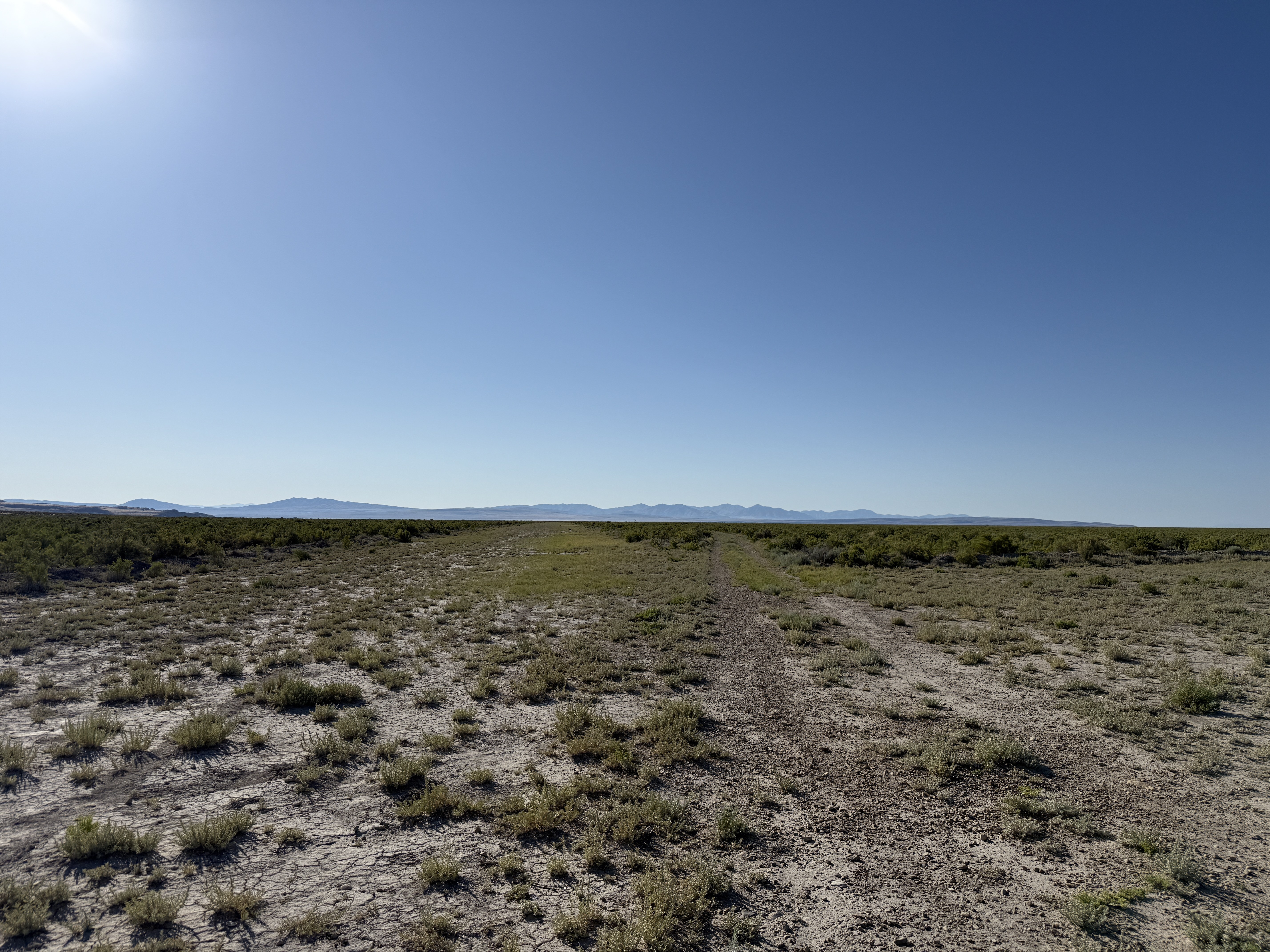
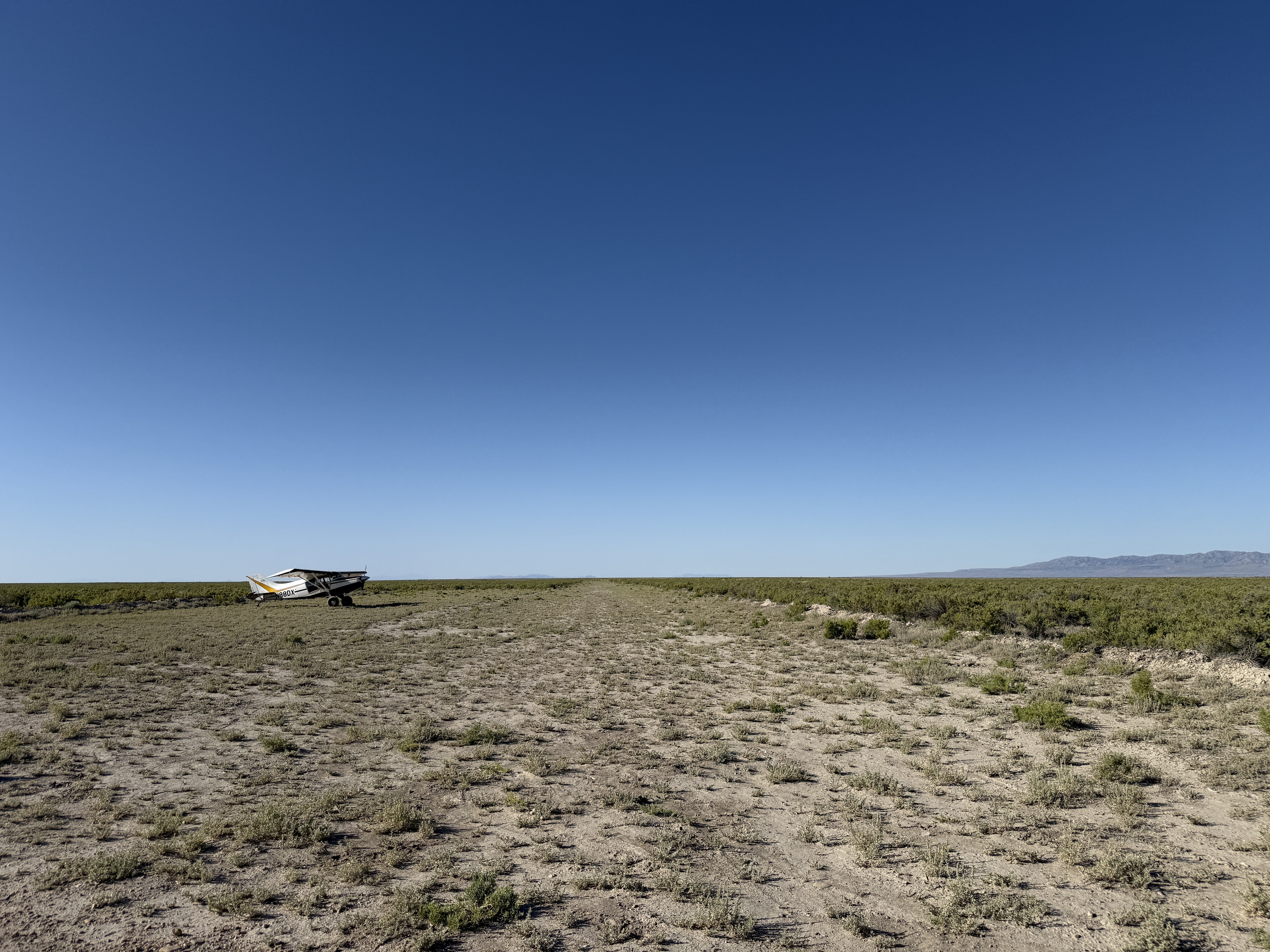
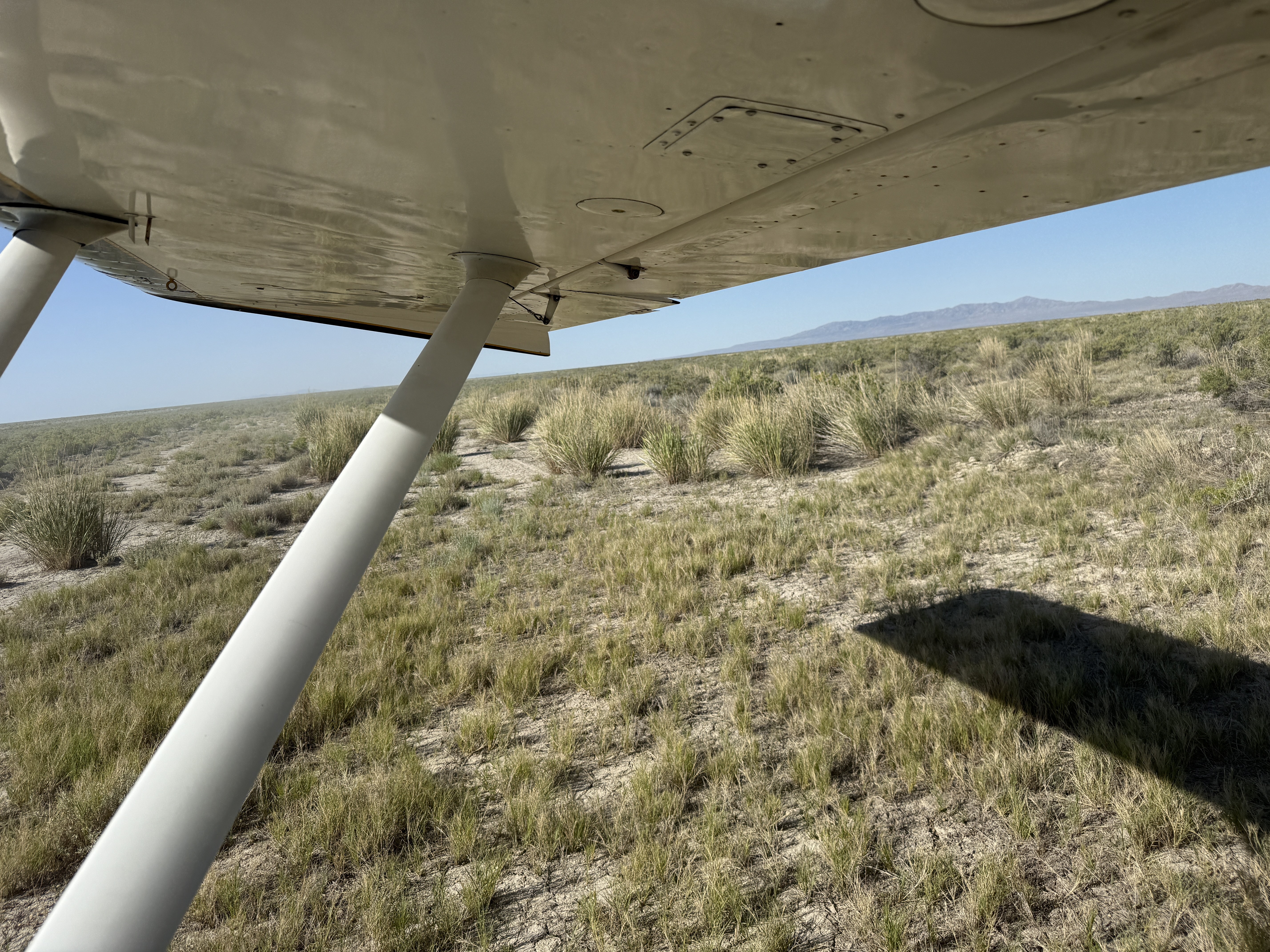
The Locmotive Springs airport, one known as the Locomotive Springs Intermediate Field, was likely constructed sometime between around the 1930s, as part of the Department of Commerce's network of airfields created to provide emergency landing opportunities for commercial aircraft. It has been seen on old airway maps as early as May 1930. As technology in aviation advanced, the requirement for airstrips such as this was no longer needed, and less than 20 years since charted, the airstip ceased to exist in any official capacity, albeit was later recognized as a "landing field" on the 1969 Locomotive Springs 1:24000 map which you can download by clicking here. Presumably the sporadic use of these landing surfaces were part of why it was recharted on the USGS topographic maps, as aviators would visit the area to practice off-field landings, or perhaps to enjoy the fishing in the nearby springs.
In April of 2019, the UBCP, together with Utah State Aeronautics, worked on a plan to rehabilitate the airstrip. Collaborating with the Utah Division of Natural Resources and the county road crew, the two runways and a small parking area were graded and the airstrip was reopened for recreational usage shortly thereafter. The airstrip, since then, has served as a place for pilots to practice their off-field landings, and with two cross runways, provides opportunities to experience crosswinds in a forgiving obstruction-free environment.
In December of 2022, the airstrip was recognized by the FAA and was designated UT94. This is part of an on-going effort for all of Utah's backcountry airstrips to be added to the FAA Facilities Directory and VFR sectional charts to educate pilots on the existence of these historic airstrips while aiding in their preservation for future backcountry pilots to enjoy. In 2023, the airstrip was then added to the 2023 edition of the Locomotive Springs 1:24000 map. You can download a PDF of this map by clicking here.
Works Cited:
Abandoned and Little Known Airfields, Paul Freeman, 2016